
From Preluk to Grobnik
Motorsport in Kvarner
Motorsport has a rich history in the Kvarner region, from the first race in 1902 that was meant to finish in Opatija but was banned, through Učka and Preluk, all the way to Grobnik, where they still race today.
- 1902
The banned Nice - Opatija race
A race from Nice to Opatija was meant to run in April 1902, organised by the automobile club of Nice and Opatija's spa commission. Italy banned it over safety concerns, days before the start.
Opatija had already prepared everything. Triumphal arches, a military band and lighting of the peaks, hillsides and the whole coastline from eight in the evening were announced for 11, 12 and 13 April, and the flags of every nation whose drivers were coming were to fly along the roads.
The entrants set off anyway on 10 April. They were ordered to keep to fifteen kilometres an hour through Italian territory, and reached Opatija exactly as arranged, for the celebration that awaited them.
- 1929
The climb up Učka, 90 corners to Poklon
The first hill climb up Učka ran on 22 September 1929 under the name Abbazia - Monte Maggiore. It was the first real motorsport competition in the region and was followed across Italy at the time. The start line was in Matulji, on the Giuseppina, the old Austrian road, and the course had more than ninety corners up to the Poklon pass. Big names were entered: Biondetti, winner at Monza, Fagioli, winner at Bologna, Zironda, Pastore in a Maserati.
A lawyer from Trieste named Poilucci, winner of the Kvarner Cup, climbed it in an Alfa Romeo in 15 minutes and 9 seconds, then lost control past the finish line, scraped a wall and broke his mudguards.
- 1931 - 1968
Circuito di Abbazia, racing at Preluk
Racing began at Preluk in 1931 under the name Circuito di Abbazia, later Circuito del Carnaro: six kilometres of public road between Rijeka and Opatija, eighty-five metres of climb, twenty-one corners. Drivers compared it to Monaco, only longer and faster.
In 1939 Mussolini banned the factory Maserati team from racing at Reims, so the team travelled to the Adriatic as a consolation trip instead. On 9 July there were nine Maseratis on the grid and around thirty thousand spectators.
Luigi Villoresi led from the start. Twenty-five laps, a hundred and fifty kilometres, an average of 127 km/h, fastest lap 130. Franco Cortese, the man who would bring Ferrari its first ever win eight years later, finished 12.2 seconds behind.
Sportscar races, Formula Junior and Formula 3 followed, and the last car race ran in 1968.
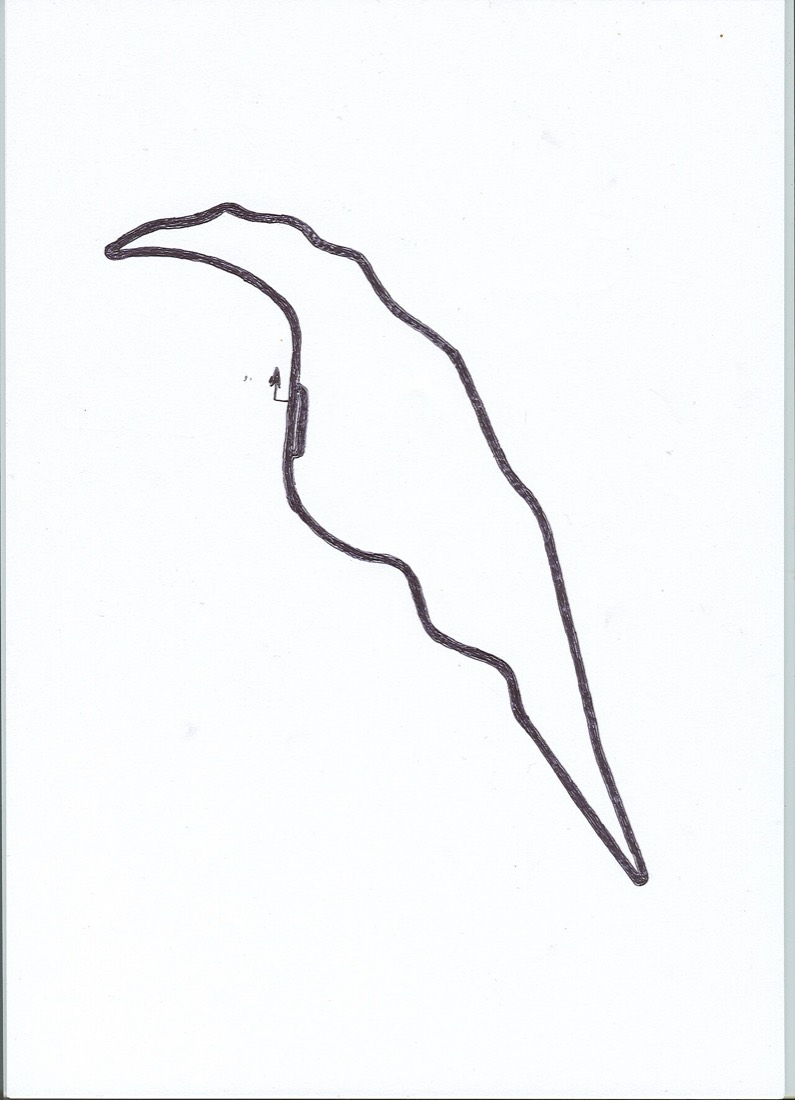
Track map of the Preluk circuit near Opatija.Michele.V, Wikimedia Commons, public domain - 1969 - 1977
Preluk, a circuit like the Isle of Man
From 1969 to 1977, with a break in 1971, Preluk hosted rounds of the motorcycle World Championship, known as the Adriatic Grand Prix and later the Yugoslavian Grand Prix. Six kilometres of road with eighty-five metres of climb, trees, stone walls, lampposts, embankments, houses and the sea beside the road, without a single run-off zone.
Riders compared Preluk to the Isle of Man: a public road, a stone wall on one side, the sea on the other, and nowhere to make a mistake. Giacomo Agostini, Ángel Nieto, Phil Read and Walter Villa all won there, and in the best years more than 70,000 people lined the road.
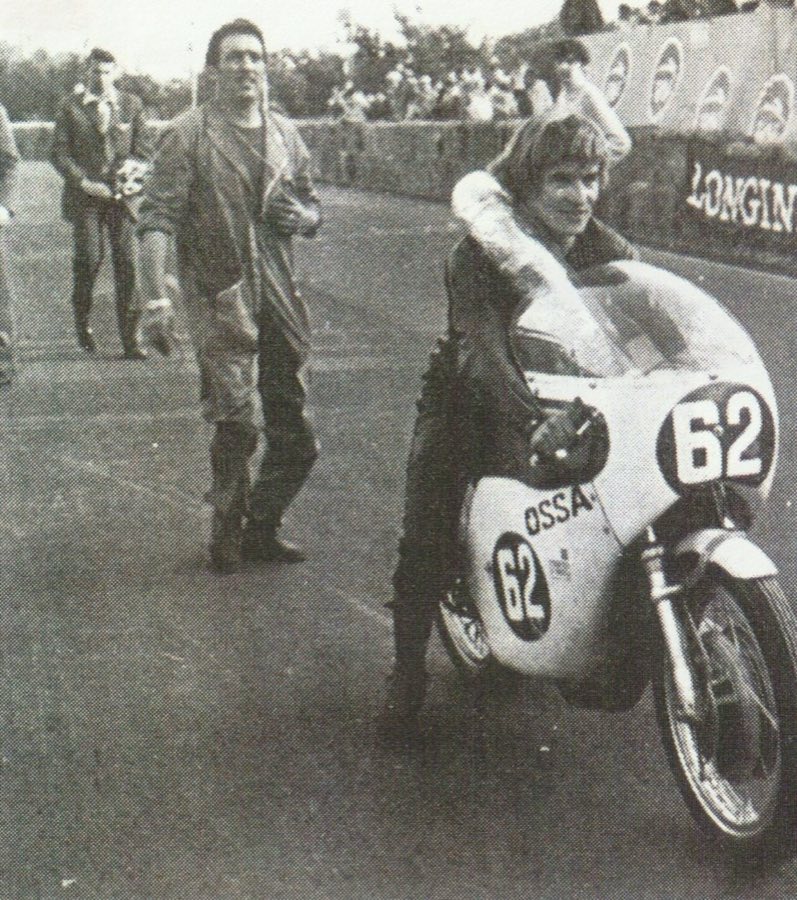
Santi Herrero on the OSSA at the 1970 Yugoslavian Grand Prix, Opatija.Montesita, Wikimedia Commons, CC0 - 1977
How it all stopped at Preluk
Fastest lap in 1939, Villoresi in a Maserati: 130 km/h. Fastest lap in 1977, Takazumi Katayama on a 350cc Yamaha: 2 minutes 13.7 seconds, or 161 km/h. The same public road, the same stone walls, and not one metre of new run-off in between.
The danger was known. After Jarno Saarinen and Renzo Pasolini died at Monza, the Yamaha, Harley-Davidson and MV Agusta factory teams refused to start at Preluk in 1973. The 500cc class was never raced here again after that year. The FIM gave the organisers an ultimatum: a closed circuit, or no more Grand Prix.
421 entries arrived for the race on 18 and 19 June 1977. The track could take 126 riders plus six reserves, from twenty-nine countries. Ulrich Graf and Giovanni Ziggiotto died, and nineteen riders were injured. Josip Vitanović had died at Preluk in 1951 and Billie Nelson in 1974.
In late June 1977 the FIM confirmed road circuits were out of the calendar, and the organisers decided to build a permanent circuit at Grobnik.
- Local
Zdravko Matulja, European champion from Kuk above Preluk
Zdravko Matulja was born in Volosko in 1957, grew up in Kuk above Preluk, trained as a mechanic in Rijeka and a hospitality worker in Opatija, and worked at Autotrans and Torpedo. At twelve he rode an HMV, a two-speed machine from the Zagreb motorcycle factory.
After testing at the newly opened Grobnik in 1979, he became a factory rider for Tomos. In 1981 he missed his chance at Europe: two friends and talents from Matulji, Tedi Jeličić and Edi Grbac, died on the way to a race in Požega.
In 1982, after five races in Italy, Germany, the Netherlands, England and Spain, he became European champion in the 50cc class. Not as a factory rider, but as a privateer. To this day he is the only European champion in that class from this region.
On a fifty he was clocked at Grobnik at 204.5 km/h. In 1983 he rode almost the entire world championship and finished fourth at Grobnik. In 1986 he built his own 80cc machine, the MTM. From 1991 to 1995 he was at war. He became Croatian champion in 1995, ended his career in 1996, and died on Christmas Eve 2022, exactly forty years after his European title.
Alongside him: Nikola Šnjarić, a Preluk winner in the 125cc class, Luciano Saletnik of Matulji, Vinko Surina, Marijan Kosić, and Opatija legend Branko Bevanda.
The motorcycle he won the European title on is on display here in our restaurant.
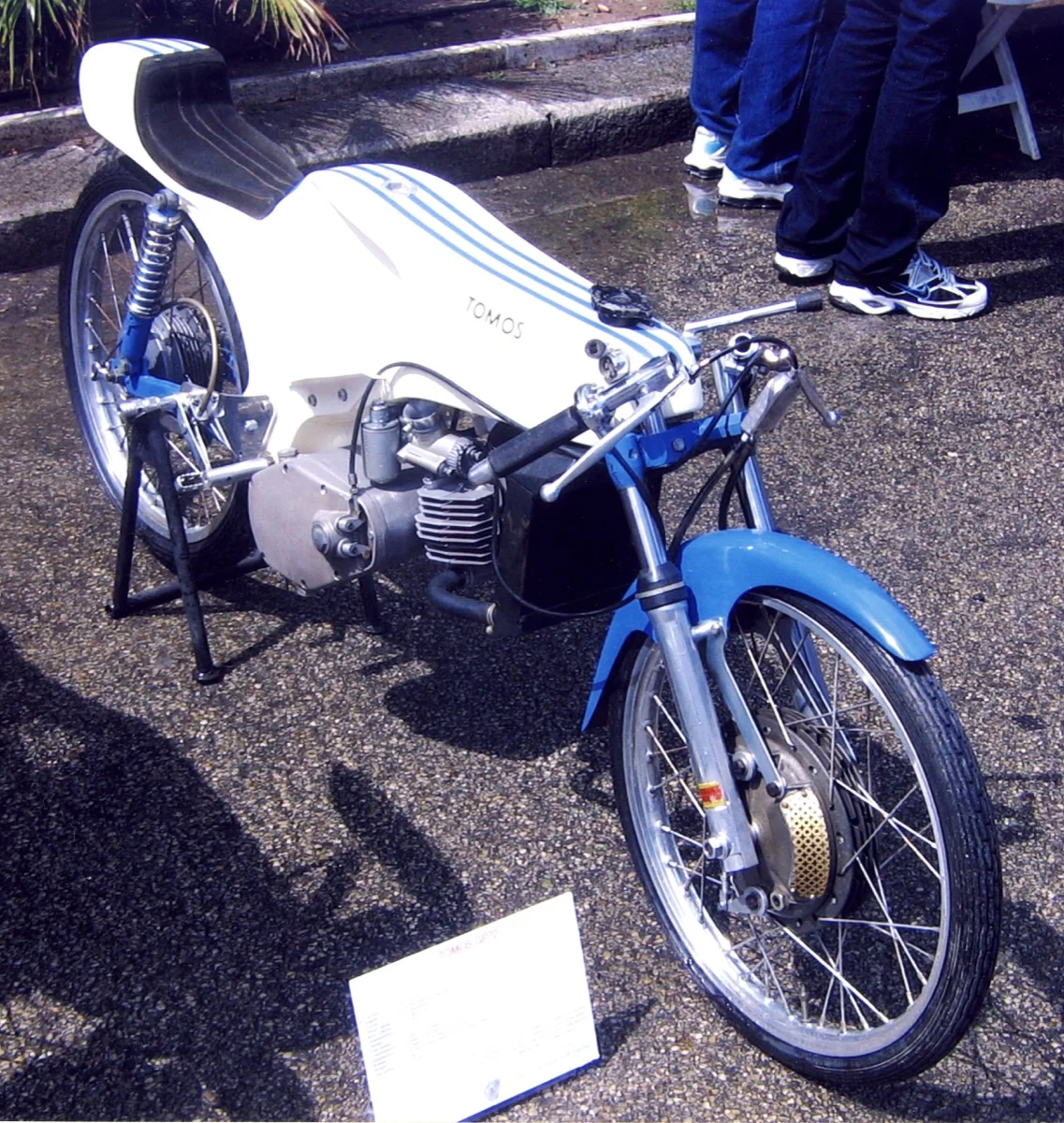
A Tomos D6 GP, the 50cc competition model of Matulja's era (illustrative photo, not his own machine).Midnight bird, Wikimedia Commons, public domain - 1971 - 1999
The Rijeka Women's Rally
Auto Klub Rijeka started a women's rally on 7 March 1971, for its twenty-fifth anniversary. Sixty drivers entered. The route ran 41 kilometres from Preluk through Lovran, Jušići and Krnjevo and back, across three classes.
The first winners were Inga Kren, Radmila Valković and Vesna Grgurina. Together with the Zagreb rally, the Rijeka event became a foundation for the national women's championship.
Twenty-eight editions were held, up to 1999. Sonja Kezele and Mirjana Bučić of Opatija each won ten times, Nađa Cenov of Rijeka eight, Olga Bebić of Split seven.
- 1978 - 1990
Automotodrom Grobnik
Construction began in June 1977, on a gravel pit beside Grobničko Polje, until then known as the Rijeka airfield. The lead designer, engineer Andrija Prager, toured European circuits with a single brief: to design the best track in the region. He came back with 4,168 metres, eighteen corners, ten metres of width at the narrowest point and seventeen on the start straight, at 320 metres above sea level.
The track opened on 14 September 1978. The first ceremonial lap was ridden by Branko Bevanda of Opatija, on a Yamaha borrowed from his rival, Marijan Kosić of Rijeka. Three days later, on 17 September, the first Yugoslavian Grand Prix was held.
The Yugoslavian Grand Prix ran at Grobnik until 1990. Winners there included Kenny Roberts, Freddie Spencer, Eddie Lawson, Wayne Gardner, Kevin Schwantz and Wayne Rainey. The last world championship race ran on 17 June 1990.

Track map of Automotodrom Grobnik.Gpmat, Wikimedia Commons, CC BY-SA 3.0 - 1991
The war
The Grand Prix was on the calendar for 1991, but was moved to Jarama in Spain because of the war. A European Cup round was held at Grobnik on 12 May 1991. It was the last major international race before everything stopped for several years.
- 2003
The Formula 1 that never came
It came close twice. According to Nacional, Ecclestone agreed to a preliminary contract to move the race to Grobnik in 1997, negotiated through Hrvoje Šarinić. The deal fell through after a weekly magazine attacked his wife Slavica, who was born in Rijeka.
In February 2003 the government made an exception to the ban on tobacco advertising for international sporting events. As Belgium and Austria were dropping out of the calendar over the same bans, it was reported that Ecclestone was seriously considering Grobnik and was reportedly willing to hand over the rights without Croatian investment. A race as soon as 2006 was discussed.
The race never happened. There was not enough infrastructure, and joining the European Union removed the tobacco advantage too.
- Today
Grobnik today: the track is still working
The track is 4,168 metres, eighteen corners, twenty-two garages, FIA Grade 4 licence. It is the only circuit in Croatia with both FIA and FIM accreditation, and it operates more than three hundred days a year.
The asphalt was replaced between December 2017 and April 2018, for the first time in forty years, in seven phases across around 55,000 square metres.
The Sidecar World Championship races here, along with TCR Eastern Europe, Alpe Adria, GT Cup and the Austria Formula Cup. From 2020 to 2022 the NASCAR Whelen Euro Series raced at Grobnik too.
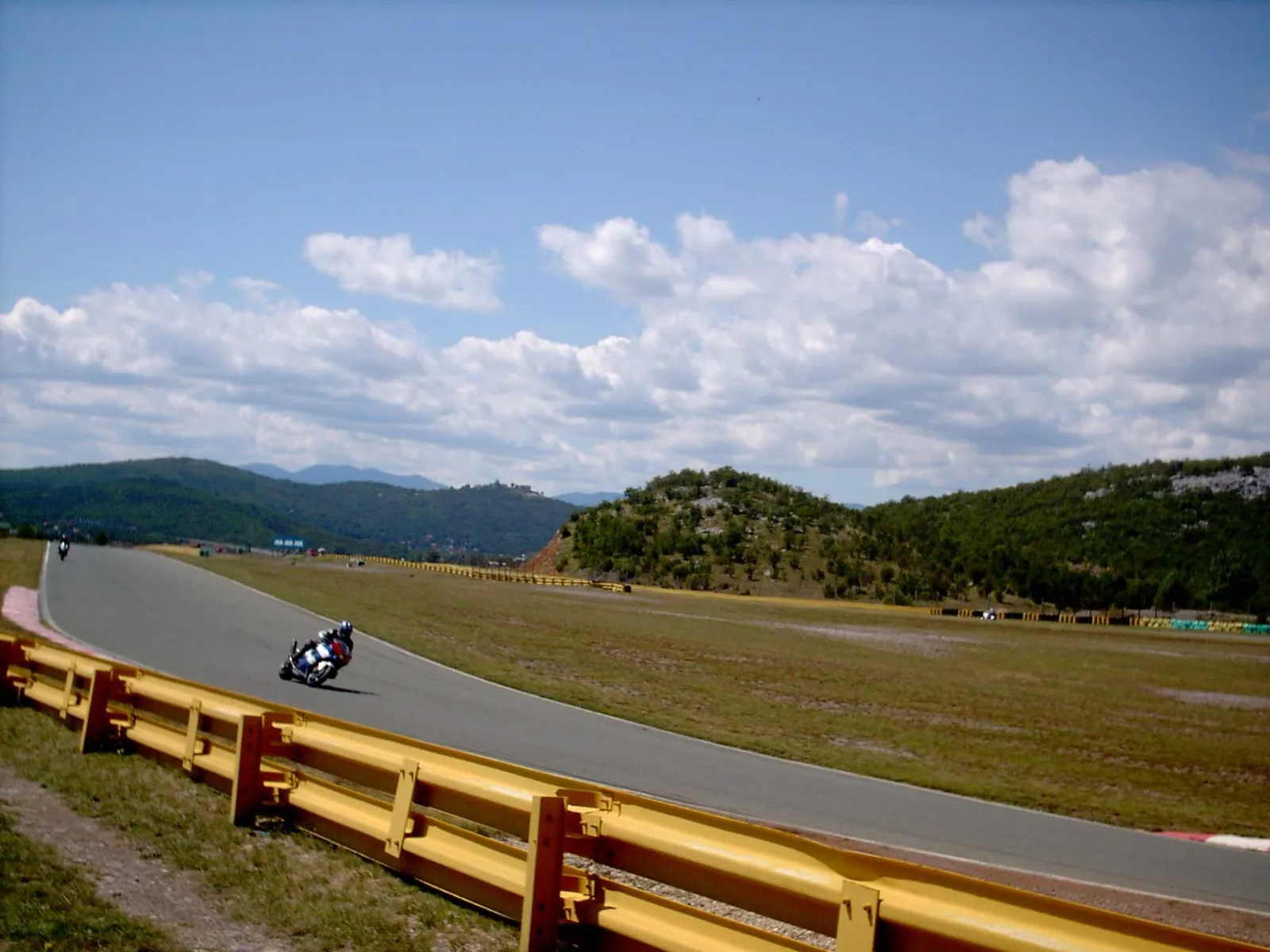
Automotodrom Grobnik today, looking down the start straight.Pigpanter, Wikimedia Commons, CC BY-SA 3.0 - 2026
The Grand Prix of Croatia at Grobnik
The Grand Prix of Croatia ran on 16 and 17 May 2026: seven series, more than a hundred and fifty drivers and a hundred cars. Formula 3 returned to Grobnik after half a century, and major international series returned to Croatia after forty years. Four organisers spent four years preparing it.
A day pass was fifteen euro, children under fourteen went free. Despite a poor forecast, a large crowd turned out. Veteran Niko Pulić raced a borrowed car and finished on the podium.
- Today
Grobnik and Preluk today
Grobnik runs track days, rookie days, a motorcycle school and training sessions, with instructors on hand for beginners.
Meet for Speed is a three-day festival in early July: hypercars, supercars, motorsport, classics and tuning, more than three hundred vehicles, with every group out on track twice a day.
Oldtimer Klub Rijeka runs an international oldtimer rally every year, the last one with a hundred and fourteen cars and more than two hundred participants.
There is not even a plaque at Preluk today to say a world championship once raced here. In 2019 Matulji researcher Goran Slavić published a book, Preluk, legenda koja živi (Preluk, a legend that lives on), drawn from an exhibition of twenty-four panels and two hundred and sixty-nine photographs.
The road has stayed public. The limit is fifty kilometres an hour, between the same stone walls.
Frequently asked questions
Why did racing at Preluk stop?
Preluk was a public road with no run-off zone at all: a stone wall on one side, the sea on the other. After two riders died and nineteen were injured at the 1977 race, the FIM dropped road circuits from the calendar, and Preluk was the last race of its kind. The organisers built Automotodrom Grobnik instead.
Where is the motorsport track in Kvarner today?
Automotodrom Grobnik, in the hills above Rijeka. It opened in 1978 and is still the only circuit in Croatia with both FIA and FIM accreditation, operating more than three hundred days a year.
Did Formula 1 ever race at Grobnik?
No, a Formula 1 race at Grobnik never happened, even though it came close twice, in 1997 and 2003. There was not enough infrastructure, and joining the European Union removed the tax advantage that had made Grobnik attractive.
Sources
The information on this page was gathered from: Novi list, Narodni list, Nacional, Index.hr, moja-rijeka.eu, riautosport.hr, zmigavac.hr, poduckun.net, Istrapedia, Istrian Encyclopedia, labin.com, racingcircuits.info, grobnik.hr, Wikipedia. If you have a correction or an archive photograph, write to us.
Visit us
Matulji, seven days a week
Reservations by phone. We are in Matulji, 10 minutes from the centre of Opatija and 20 minutes from Rijeka. Parking is free, and both floors are reachable by lift or stairs.